in between


There is no definite time that I can remember. But it was definitely in 1999, when I was only 5 years old. It was most likely some times during the day because I remember seeing the sun reflection on the floor. Our home phone gave out a sudden ring. It was near the bathroom and my mom rushed to pick up the phone. I watched her over from the television room, trying to figure out who the calling was from. A few seconds after speaking a few words, I saw her back tremble and I couldn’t recall the rest. She hung up the call and went into my sister’s room which is just a few steps away from the home phone and laid down against the wall. I still remember very clearly the layout of my sister’s room, the single-sized bed as well as the yellow-painted walls that surrounded it. I stood still by the doorway of the room, looking at her back as she lay down there. She cried silently. A few moments later, I realized that my mom was crying because my grandmother, a.k.a my mom's biological mother, had passed away.

Mom wasn't there when grandma took her last breath, even when she was buried. My grandma was in Bandung at the time, along with my aunties and uncles who stayed there with her. Meanwhile, my family was in Makassar—the city in which my mom has lived in since she got married to my dad with all its novelties. Considering that I was only 5 years old at the time, my younger sister must have been 3 and I have two other siblings who were still in elementary school. These days, buying plane tickets is just as easy as a few taps away. But at that time, the situation did not allow us to fly right away. Thus, all she could do was lie down against the wall and cry all day.

Only about a week or two after that, mom finally went to Bandung with all her children and also managed to visit South Sumatra. Meanwhile, dad stayed alone at Makassar. Aside from having to work, at least someone has to look after the house.

The only thing I remember from grandma is her face. Not because I met her often, but because there was a photo of her that was put on the shelf that connects to my bed—along with my grandfather—who passed away before mom got married. I have no memories of either of them. There was absolutely no emotional bond, especially between my grandmother and I. So when I, for the very first time, along with my relatives and other family members visited my grandmother's grave, I considered it merely a visit. There was no feeling of sadness arising as I looked down at my grandmother's name written on the tombstone. I remember I had just woken up and I didn't even take a bath before going there. I wore clothes that were almost too fit in my body with a picture of Winnie the Pooh on it. Mom was busy trimming the plants off of my grandma's grave and I felt very sleepy.

A couple of years after that, my grandmother, a.k.a my dad’s biological mother, passed away. I can't tell that I have a deep emotional bond with her, but I remember making her laugh when she was sick. Somehow, I still remember the shape of her thin fingers, even the smell of her white skin. Grandma had been sick for quite so long, but I never knew what her illness was. Maybe because she was too old. And old people are susceptible to disease. She was being taken care of at her house in Bone—which is five hours away from Makassar—by my aunties who lived in that city with her. Sometimes dad came visiting and took me along with him, so I understood the situation quite well. I still remember the small room near the kitchen where my grandmother was being cared for, even in which direction her body was facing. The first time I saw my aunt cleaning grandma's feces, I was stunned. I think it was the first time I saw human feces other than my own. And it was the first time I'd ever seen an adult clean up other adults' feces.

Before being buried the next day after being declared dead, grandma was put in another room on the second floor. The atmosphere of that night is still vividly etched in my mind. Her body was on the bed covered with a white-colored mosquito net—or kelambu, as it was called. I touched her cold hand and then landed a kiss on her cheek. It was the very last memory I have of her.

As a kid, I didn't quite understand what death means, at least until the passing of my grandma(s). I just kinda led to believe that every dead person would go to a better place, wherever it might be. Seeing my mom cry that day made me feel helpless. Should I have asked right away what made her cry? Should I at least show some empathy by being by her side? As time went by, I began to understand that death is inevitable. I was not yet 8 years old when I began contemplating death before going to sleep. I imagined both my parents would die someday. Then, I began to imagine natural disasters that could happen at any time and take the lives of people I care for. It was by the end of 2004 when the tsunami occurred in the Indian ocean. For days straight, I couldn’t help myself from thinking; what if that incident happens to me? In the simulation that I did within my head, I felt I could be strong enough to face the situation. However, as I gave the thought another round, there was a sudden pain within my chest and it brought tears to my eyes instead.

What would the separation be like for me? How deep would the pain be?

Somehow, I learned about death by how other people cope with it. That is how I understand and try to connect to the feeling of abandonment before I experience it for real. One night around early 2005, I was at school for a Scout camping event. Suddenly, the brother of one of my friends came to pick up my friend, bringing the news that their father had passed away. That night, I visited my friend's house with my parents since we lived in the same housing. It was one of the moments that I learned, for once again, how dreary death is. From inside the room where my friend's father was, I looked into a room through the half-opened door. In that room, there was the older sister of my friend. She was already in senior high school. Like my mom when she heard the news of my grandmother's death, my friend’s sister lay on her bed—and wept as she lay against the wall.

I also still remember very well, in 2007, a national TV journalist reportedly drowned while covering the news of a shipwreck in the waters of West Java. The first time I watched the news on the television, I cried uncontrollably. I didn't even know him and he doesn't even know me either. But the footage about him was enough to make me feel broken because I knew that his loved ones must have felt broken too.

I became more and more familiar with the grief. And knowing anybody had to deal with it, is very torturing. At first, I thought that being cold-hearted could make the grief easier to overcome. I didn't want to get too attached to anyone. Even worse, I want people to dislike me. But since I realized that you don’t need an emotional connection to feel torn apart, I knew that I was mistaken.

With all that being said, I have to admit that I also don't feel any emotional connection with my family, especially my parents. I don't know if it was that ‘gap’ that made me grow up to be such a grumpy kid, or if it is the other way around. As a child, I was known as the one who likes to cry. Even a lot worse, the crying always comes with screaming. Each time I get my haircut at the salon near my house, I would come home and cry while screaming in front of the mirror. When I couldn't express my frustration with crying, I would hide in a corner of the house until I felt fed up. As far as I could remember, all the feelings I felt at that time—each part of its fluctuation—I faced them alone. I can't remember being told 'good job!’ ‘well done!’ for every little thing that I do, which makes me think that it amounts to nothing.

Sometimes it occurs to me that I envy other kids who earn influences from their family—that they inherited the taste from their parents. Ranging from music, art, or hobbies that they are living up to until now. In any interview sessions, someone will usually be asked who first introduced them to the particular field that they are engaged in. 
“My dad was the one who first taught me to play guitar.” 
“It was my mom who taught me how to bake.” 
"When I was little, my father enrolled me in art courses." 
“I can speak English because my mom and dad have used it since I was 10 years old.” 
“I love listening to Bill Withers because my mom and dad always play it at home every weekend.” 
“I like writing because my parents spoiled me with books.” and so they would say.

Coming to think of it, I realized that my influences were never from my closest person, especially family. I never know what kind of music my parents like to listen to. None of them ever taught me any practical skills, if that explains a thing. Never have I ever registered in any extra courses other than the ones I had in school. There were times when I could have asked them, but I knew for sure that it would cost them a lot and I am not the only child in the family. Thus, I learned everything my way. There was only one time when I saw my father play my guitar, in front of the television, and the rest remained non-existent. My first guitar was the gift that I asked my parents for as a graduation gift after I spent 3 years in junior high school learning from a classmate. I first learned it when I was in my first grade. Normally, they were supposed to watch me perform with my band when I participated in some school gigs. But they never knew that I had any. It was rather too awkward to tell them in the first place.

I feel somewhat grateful that my circumstances allowed me to make the most out of all the available resources. Perhaps that was what makes me a typical observant kind of person, that I couldn’t come up theoretically. I am more of a learning-by-doing person. Always have, always am. That is what makes it hard for me sometimes because I always end up thinking that I am unqualified. When I know how to do something, I just know. Just don't get me wrong. I have never blamed, and would never blame my parents for my knowledge of something that they never taught me about. It was never an issue. However, there is no limitation of where you can get knowledge from.

There are so many personal-collective memories yet they generate many kinds of feelings. Long before I was born, my dad had been working as a lecturer. He would sometimes take me with him to the campus when he had classes to teach. Usually, I would wait outside the class, by the edge of the corridor, with a piece of teh kotak in my hand. Other times, I waited beside him in the class, like a lecture assistant, but did nothing but sit there. When I am asked what I want to become, sometimes I answer that I want to become a lecturer. Of course, it was only one of many professions that I wanted to be (which I strived to be still art and design-related). But for this one, I want to become a lecturer because I was exposed to it by him. All my life.

Dad would come home from campus with a sling bag full of papers and a box of snacks—buana, to be specific with the brand. He always brought home the lunch box he got from the seminars or final exams which he attended. When he didn't seem to carry it by hand, I would check into his bag myself. On regular days even when he didn't have any campus-related activity, I like to check in his bag only to find a piece of teh kotak. He would just smile when I pointed out that there was something 'left' in his bag. It was like finding a treasure.

Every Wednesday afternoon and Sunday morning, dad would play tennis on a tennis court at the campus and often took me with him. It was kind of his routine. As far as I could remember, he lived a healthy life—does regular exercise, doesn't smoke, and doesn't even drink coffee at all. We will ride in his dark blue-colored Vespa to the tennis court which is not far from our house. Truthfully, I've always thought that his Vespa was kind of heavy. Even now when I describe it to anyone, I would describe it saying “It was very heavy!” and they would say that it was probably not as heavy as I thought it was. Perhaps because I was only a kid back then and I don’t adjust my memory to my current knowledge. After all, I always remember my dad’s Vespa, which he finally ‘gave away’ to someone before I grew up. It was the Vespa that brought me to enroll in elementary school after spending a few short months in kindergarten. At the age of 5, I demanded to be enrolled in elementary school because I thought kindergarten activities were no longer fun. It was boring, to sum it all up. “I am sick of eating lunch boxes and singing along together every single day.” I explained to my parents. Finally, dad sewed me a uniform—the typical white shirt and the red skirt—which I wore the day I first came to the elementary school to enroll. Apparently, he was being too optimistic as there was a huge chance I wouldn’t be accepted. I wasn’t qualified in terms of age. Just a few seconds after I performed reading the Pancasila on the wall, my life began.

Dad never said anything about my hobby—how I like spending hours drawing, sometimes I create noises at midnight with my guitar-playing, and how I always stay up late doing things I like. We never had any daddy-daughter talk so there was not any advice in our conversation that I could quote and bring up in any of my talks. He could have taught me how to sew, or maybe take some time to teach me his native tongue. Sometimes I think if only my parents were a little bit more supportive, let alone constructive, things would have become ideal. Maybe he just couldn't care less about what I was doing. Until one day, one of his friends happened to come to our house. Before he got to leave, my dad excitedly brought that friend of his to the front of my room to show the drawings that I sticked on the wall. "She drew those herself." he said. 

The other day, I heard he was talking about me on the phone. A moment before that, I managed to drag a very big wardrobe on my own. As I said, it was very big as it almost covered the whole side of the wall and was made from real wood. Dad peeked in from the window when I did that. I didn’t know whom he talked to across the phone, but he laughed hard.

Things got very tough when dad got sick, but at the same time, there was a silver lining striking on the cloud. It was like I was carrying the whole world on my back and yet I am honored to take such responsibility. “You are very strong.” some of my friends said to me, even a best friend of mine acknowledged that he cried when we got separated after I shared with him about my circumstances. I didn't feel the urge to tell the whole scene to everyone, which I wouldn’t, but some of my friends definitely knew. Not even my family knew about how I felt back then. They only judge from what they see, which is alright. “Icha - who loves her dad so much.” That's how my big family would describe me. Trust me, I have done everything I could. Even when I never really felt any sense of proximity between my dad and I—in particular.

Though I believe in my own strength, I realized that being strong isn’t limited to the physical state only. Am I mentally strong? How do I act on self-control? Now that I am no longer a young adult, the term strong has an expanded definition. It doesn’t only refer to both mentally and physically, but to any state that affects my being.

The good thing was my relationship with my dad finally let loose. Throughout the years of awkwardness, it has evolved into a state that creates multiple senses. Mostly relief and gratitude, to mention a few. We finally had our first deep talk and I got to ask him a question that I've always wanted to ask my whole life. I even called him with ‘sayangku, cintaku’, and sometimes I would hug him just out of the blue. Unfortunately, it all happened after I found out that he had a short-term memory loss. Dementia, I assumed. I was the first person to find that out, right on Eid day in 2017. He lay down on his bed with a blank stare. Even when he spoke, his eyes seemed hollow and it was as if his soul wasn't there. I tried to address a few questions and just attempted to talk to him as long as possible. At one point, he asked me, “where is my wife?” I froze. Before my brain got to processing the question, my tears had already fallen. There were only the two of us. Truthfully, I can't count how many nights I spent alone with dad. I have lost count of the moments I was being 'the only person’.

Since that Eid day, I have always imagined the worst case. To be truthful, long before that day, my head already wrapped around that thought since dad had been sick for so long. But ever since he had memory issues, the possibility always felt as close as a heartbeat. And the worst case happened almost 5 years later. However, there is life that happens in between. Sometimes I would look back and think; how did I manage to get through them all? There were plenty of dramatic scenes and my heart got ripped out most of the time. Those big chunks of memory, like the ones in my childhood, will remain vivid until they are eroded by time.

I always think that our memory has its way to play a trick on us. It might be faded, but never removed. Last year in early April, just before Ramadan, I went to Palembang with my uncle, aunt, and cousin. Before heading there, we stayed for one night in Gunung Raja village, Muara Enim district, the place where most of my mom’s big family was born, grew up and buried. The morning after we stayed at my cousin's house, or before we continued our journey to Palembang, we visited the grave of my grandfather, a.k.a my mom's father. The location is in the village of Gunung Raja—quite remote, but there are still houses around. Some are even the houses of our relatives. The graveyard was nothing like I remember it to be—as I still have the picture of myself sitting on my auntie's lap along with my big family by the side of my grandpa's grave. By the time we arrived there, we all did the typical ritual of visiting the grave—trimming the grass off the grave with bare hands—and most importantly, reciting prayers together. Before we even got to the grandfather's grave, I noticed there was a sound of sobbing coming from my uncle. He wept as he walked toward the grave, looking at the name written there. It had been 34 years since my grandpa's passing, and it still hurts the hell out of him. No matter how well you seem to get along with the hole that the grief has left you with, you just can't help yourself from feeling sad. There's no magic cure and it will always feel as if something is missing. It is something that I have learned the hard way.

Grief is a very strange thing. It’s an odd mixture of all bad feelings you thought you could endure, but it actually rips you out to the core. Everyone will die—I guess it is already embedded in our minds even when we don't seem to think of it or talk about it. It is just a matter of time anyway. Throughout my life, I have never been good at expressing condolences. For me, the most genuine thing that one can do in such a situation is to share silence with the one who is going through the hard times. No words could be comforting enough, but I highly appreciated each of the helping hands that try to reach out. I think what saddens me the most is knowing that the person is no longer present. Never have I imagined otherwise—like maybe if my dad was still around, he would be able to see me achieving many milestones—like what my best friend assumed after I told him that I felt like crying the whole day and I didn't know why. It was never the point, neither was the case. It is a very, very strange feeling as you see the person being taken into the grave as if you leave them alone there, but at the same moment, you are the one who is being left. The pain is doubled. Eventually, you’ll be reminded over again that the person is no longer present and that’s the only truth that strikes you out.

Everyone has their own coping mechanism, and I never really thought of mine until very recently—as a best friend of mine asked me. It still feels like yesterday when I cried during an online meeting—of course, with the mic and camera off, because I was still grieving. I had no real interaction with people for about a couple of weeks and just tried to bury myself in movies and books, basically just trying to let the feeling engulfed. Somehow, I am not convinced that my life has become better—or whether there is a slight difference between now and then. As cliché as it sounds, this is just how it is, in any sense. The world will turn dark at times that it makes you unable to see, yet it will get very bright too. Though that doesn't necessarily mean you will be able to see things through. We all feel so many emotions, and that’s just how all this has been.

Short Term 12 (Destin Daniel Crelton, 2013)

Saya pernah mendeskripsikan kepada seorang teman bahwa menonton film itu ibarat menempati tubuh orang lain, dan keluar dari sana dengan perasaan yang aneh. Seperti mimpi disaat tidur, semua terjadi dengan begitu cepat – bahkan rasanya hampir tidak dialami sama sekali. Juga sama halnya seperti mimpi, selalu ada potongan-potongan yang tertinggal di pikiran dalam waktu yang relatif lama. Ajaib bagaimana sebuah karya – dalam hal ini yang berbasis audio visual – bisa menjawab kegelisahan sekaligus mengantarkan pada pertanyaan-pertanyaan baru. Barangkali, kita memang butuh merasa bingung dulu sebelum sampai pada titik memahami bahwa ternyata kebingungan itu lah yang kita butuhkan untuk dapat bergerak, dan itu yang menjadikan kita sebagai sebuah entitas. Kita harus terus bingung dan bertanya-tanya untuk bisa benar-benar paham – sekalipun dari tanda-tanda kecil yang muncul diantaranya. Dan meskipun kita tidak akan pernah menemukan jawaban yang mutlak dari semua kebingungan yang selalu kita coba sembunyikan.

–

Pengalaman pribadi adalah dasar paling umum seseorang dalam berkarya. Tentu, akan lebih mudah menceritakan sesuatu berdasarkan kejadian yang sudah dialami dibandingkan dari imajinasi. Begitu pula Destin Daniel Crelton saat dia menulis cerita untuk film Short Term 12, yang berdasarkan pada pengalamannya bekerja di sebuah fasilitas kelompok untuk remaja. Melalui karya filmnya itu, dia menawarkan wacana tentang trauma psikis dan sebuah kehidupan yang dijalani bersama dengan satu emosi yang mendominasi, yaitu trauma tersebut. Perdebatan batin yang timbul tenggelam digambarkan secara rapi, sehingga siapapun yang pernah atau sedang mengalami pergejolakan yang sama dapat larut dalam emosi yang tergambar dalam filmnya.

Cerita berawal dari pameran utama yang adalah seorang perempuan muda, menjalani hari-hari bersama kekasih dan rekan kerjanya dengan mengurusi remaja-remaja bermasalah di sebuah rumah kelompok. Situasi itu mengantarkan ia pada pertemuan dengan seorang remaja perempuan – yang seakan hadir untuk menjadi cermin dimana ia bisa melihat gambaran dirinya sendiri di masa lalu. Kedekatan emosional antara keduanya terbangun melalui sesi-sesi obrolan yang melibatkan kisah pribadi – bahkan dari sisi yang paling gelap. Kesamaan-kesamaan pengalaman, cara pandang, hingga minat, menjadi beberapa dari sekian alasan untuk kedua tokoh ini semakin memahami satu sama lain. Dengan jelas, Destin memperlihatkan bagaimana kesamaan menjadi kunci dalam mengatur pola cerita dari film ini. Di kehidupan nyata, kesamaan adalah variabel yang paling mungkin menghubungkan antara dua atau lebih manusia. Pertanyaan yang muncul kemudian, apakah kesamaan itu justru akan menyederhanakan hubungan itu sendiri, atau malah memperrumit?

Di akhir film, diperlihatkan bagaimana si tokoh utama akhirnya mampu berdamai dengan ketakutan-ketakutan yang selama bertahun-tahun mengisi semesta pikirannya. Tangis harunya pecah saat ia menatap sebuah layar monitor – bersama dengan sang kekasih dan seorang dokter kandungan – yang memperlihatkan kondisi janin yang sementara bermukim di dalam tubuhnya. Apabila si tokoh utama ini seakan bercermin pada si remaja perempuan yang muncul hampir di sepanjang film tadi, maka saya pun merasa kehadiran tokoh utama ini merefleksikan perjalanan yang sedang saya lalui. Serentetan pertanyaan pun muncul setelah menyaksikan film ini. Misal, bagaimana harusnya keterbukaan itu diciptakan dalam konteks hubungan? Atau apa yang harus dilakukan dalam proses mengaburkan luka mental, sekalipun itu tidak akan pernah benar-benar kabur? Bagaimana untuk menguatkan diri sendiri ditengah ketidakpercayaan terhadap banyak hal? Bahkan setelah bertahun-tahun telah lewat sejak saya pertama kali menonton film ini, saya juga belum menemukan jawaban yang mutlak dari pertanyaan-pertanyaan itu. Namun ada banyak tanda-tanda yang saya temukan diantara kebingungan – yang sedikit demi sedikit membuat saya paham tentang hidup secara garis besar.

Suatu hari di bulan Mei di tahun 2018, sebuah status di Twitter memancing saya untuk merespon.

“Film apa yang pernah kamu tonton, yang mampu membantu memulihkan luka batinmu ... yang berhasil melelehkan hatimu?”

Lalu, saya menjawab dengan dua buah kalimat beserta dengan sebuah poster film.


"ada beberapa sih. tapi yang langsung terlintas di kepala itu Short Term 12."

Pasar dan Ingatan Masa Kecil

Memiliki ingatan yang kuat bagi saya merupakan berkah, sekaligus sebuah kutukan. Saya tidak tahu pasti sejak kapan saya menyadari bahwa saya memiliki kemampuan untuk mengingat kembali partikel-partikel masa lalu dengan nyaris selalu akurat. Partikel tersebut bisa berupa warna, aksara, waktu yang spesifik, hingga ke wujud suatu benda. Suatu hari, saya asal menceritakan ke Mama tentang momen saat saya pergi ke mesjid untuk mengaji. Usia saya waktu itu sekitar 5 tahun. Saya, bersama dengan tetangga sebelah rumah yang usianya sebaya, berangkat ke mesjid yang tidak begitu jauh dari rumah kami dengan berjalan kaki. Ketika saya menyebutkan warna pakaian yang saya kenakan—yaitu hijau tua dengan sentuhan metalik—Mama tampak agak heran dan cenderung tidak percaya. “Betul itu.” Sebelumnya, dia bertanya, “Kenapako bisa ingat?” “Kenapa bisa ingat?”

Percakapan itu berhenti disitu. Saya memutuskan untuk tidak melanjutkan pada bagian saat Ibu yang tinggal dua rumah dari rumah kami menyapa saya dan tetangga sebaya yang berada dalam setelan pakaian muslimah masing-masing ketika kami berjalan melewati depan rumahnya.

“Cantiknya!” Ucapnya disela aktivitas menyapu halaman rumah di sore hari sambil melihat ke arah saya yang mengenakan pakaian berwarna mentereng. Respon itu sebenarnya tidak membuat saya senang. Karena sejujurnya, saya merasa tidak percaya diri dengan pilihan warna pakaian hijau tua metalik. Bahkan sekarang, kecil kemungkinan saya akan muncul dengan warna itu.

Kini, lebih dari 20 tahun kemudian, sebuah rutinitas kembali mengingatkan saya akan cerita masa kecil. Dua tahun terakhir, setiap akhir pekan, saya mengunjungi pasar yang terdekat dengan rumah. Meskipun dekat, saya masih harus menggunakan kendaraan untuk sampai kesana, yang kurang lebih memakan waktu 15 menit. Bisnis rumahan yang ditekuni oleh keluarga saya membuat intensitas kunjungan saya ke pasar menjadi meningkat. Biasanya, kakak perempuan saya akan membangunkan saya pagi-pagi sekali dengan cara yang agak sedikit menjengkelkan, yaitu menggoyang-goyangkan tubuh saya setiap beberapa menit. Hal itu seringkali membuat saya kesal, namun seringkali juga saya dibuat kalah dengan pemikiran bahwa ketika kakak perempuan saya marah, maka tidak akan ada kesempatan kedua — setidaknya di hari itu.

Photo is taken by me

Pasar adalah tempat yang Mama kenalkan semenjak saya kecil, dan akan selalu familiar sampai nanti. Kami sekeluarga sangat jarang mengunjungi pusat perbelanjaan, atau ke restoran bersama-sama. Hal itu tidak pernah sama sekali menjadi masalah buat saya, bahkan hingga saya beranjak dewasa. Dulu, perjalanan ke pasar adalah salah satu perjalanan yang paling menyenangkan, sekaligus memakan waktu. Saya dan Mama, harus menaiki becak tradisional yang akan mengantarkan kami hingga ke gerbang kompleks. Lalu setelah kami menyebrang, kami harus menunggu angkutan umum yang sesuai dengan tujuan. Biasanya di tengah proses menyebrang, beberapa angkutan umum akan berhenti dan menunggu sampai calon penumpangnya tiba di seberang jalan—sekalipun calon penumpang itu sudah lebih dulu memberi tanda penolakan dengan gelengan kepala atau lambaian tangan. Nampaknya, dalam hal kegigihan, kita harus banyak belajar dari supir angkutan umum.

Di tahun itu, atau pada tahun 2000an awal, pete-pete adalah pilihan transportasi paling populer di kota Makassar. Angkutan umum dengan ciri khas warna biru itu adalah saksi bisu perkembangan kota yang saya tinggali sejak lahir ini. Apabila ditanya soal cerita menarik tentang pete-pete, tentu saja saya sama sekali tidak perlu berfikir keras. Mulai dari ketiduran di bahu penumpang lain, berada dalam pete-pete di tengah kemacetan dari sore hingga malam hari, sampai nyasar sendirian hingga ke terminal. Yang terakhir ini bahkan terjadi ketika saya sudah duduk di bangku SMA.

Kembali ke pembahasan mengenai pasar. Salah satu dari cerita lain saya bersama pete-pete adalah perjalanan ke pasar bersama dengan Mama. Seperti penumpang pada umumnya, saya akan menempati bangku yang kosong saat menaiki angkutan. Namun, ketika angkutan nyaris dipenuhi oleh penumpang, Mama biasanya akan langsung menyuruh saya pindah ke pangkuannya. Sebagai anak kecil, saya memahami bahwa entah seberapa banyak ruang kosong yang tersisa di bangku penumpang, si supir akan tetap melirik dari kaca spion tengah untuk memastikan dimana saya duduk—entah menempati kursi, atau di pangkuan. Biasanya, saat sudah cukup merasa diperhatikan, Mama dengan suara lantang akan memberi tahu si supir, “bayarji ini, Pak!” ucapnya, merujuk kepadaku. Saya mempelajari bahwa salah satu kekhawatiran supir angkutan umum adalah keberadaan seorang anak kecil yang akan membuatnya kehilangan sejumlah nominal biaya angkutan untuk satu orang dewasa—apabila ia tidak dipangku.

Di pasar, berbagai jenis manusia berkumpul. Dari anak kecil, orang tua, ibu-ibu, remaja, sampai manusia lanjut usia. Dari yang gigih dalam menawar dan tidak ingin ditawar, sampai yang pasrah sejak harga pertama disebutkan. Dulu, saya hanya akan diam mengamati saat proses tawar menawar berlangsung. Sekarang, sebelum Mama sempat mengucapkan sepatah kata di depan penjual, biasanya saya sudah lebih dulu ingatkan, “jangan ditawar, nah.” Apalagi kalo penjual yang disambangi adalah orang tua.

Saya melihat pasar tidak hanya sebagai tempat bertransaksi, maupun tempat sekelompok orang berkumpul. Lebih dari itu, sebagai anak yang tumbuh dan dibiasakan dengan lingkungan pasar, saya melihat tempat itu sebagai ruang untuk belajar—baik dalam hal merawat empati, menjalin interaksi yang berkelanjutan, serta memahami keberagaman. Di kunjungan terakhir ke pasar, saya dibuat tertegun ketika penjual ikan langganan keluarga saya berkata ke kerabatnya saat saya datang, “adami Ibu.” karena saya merasa masker yang saya dan Mama kenakan membuat kami agak susah dikenali. Hal-hal sederhana seperti itu, yang selalu membawa rasa haru—sebuah penanda bahwa hati ini masih bekerja dengan baik.

Sedikit banyak, pasar adalah salah satu tempat dimana inspirasi bertebaran—di langkah-langkah kaki yang tersendat-sendat, kantong-kantong yang dibawa yang melebihi jumlah tangan, suara-suara pedagang yang menyimpan harap, serta segala peluh dan syukurnya.

Nanti Kita Cerita Tentang Pandemi

Saya tidak akan membuka tulisan ini dengan kalimat semacam “Sudah lama saya tidak menulis” atau “Sudah lama saya tidak mengupdate postingan di blog ini” seperti yang saya tulis di postingan terakhir dan beberapa postingan lainnya saat saya baru kembali menulis setelah meninggalkan blog ini untuk beberapa waktu. Kenyataannya, saya masih mengunjungi blog ini sesekali, untuk membaca ulang beberapa tulisan lama dan mencoba mengingat kembali momen dan perasaan saat saya merangkai kata demi kata dalam tumpukan tulisan yang saya tinggalkan disini. Satu hal yang saya syukuri adalah kegemaran saya dalam menulis sejak lebih dari satu dekade yang lalu—yang membuat saya selalu bisa menelusuri jejak yang saya tinggalkan dan menyelami kotak kenangan yang membentuk saya hingga hari ini. Sepertinya, menjadi dewasa adalah perihal menerima bahwa setiap momen yang dilalui, sudah menjadi bagian dari diri. Setidaknya itulah yang saya pelajari selama tiga tahun terakhir—diantara rentetan peristiwa yang mengambil banyak ruang dalam kepala. Sulit rasanya menyebutnya sebagai peristiwa acak, dan saya pun tidak ingin menyebutnya demikian.

Tahun ini bahkan belum mencapai setengah jalan, namun sepertinya sudah banyak sekali orang yang dibuat kewalahan dengan apa yang terjadi selama beberapa bulan terakhir. Berbagai macam berita buruk muncul satu persatu. Seolah tidak diberi ruang untuk bernafas, setiap hari orang-orang harus bertarung melawan realita yang dunia suguhkan. Kenyataan pahit, kepergian, kehilangan, dan segala rencana-rencana baik yang tertunda. Bagi sebagian orang, bersikap pesimis adalah jalan yang paling rasional. Hal ini mengingatkan saya bahwa tahun yang paling berat dalam hidup sudah saya lalui enam tahun yang lalu. Dan setidaknya ingatan itu yang kini menguatkan saya—bahwa saya bisa melewati fase ini walaupun memakan waktu yang tidak seorangpun dapat pastikan, kapan ini akan berakhir.

Saya bukan orang yang paling penuh dengan energi positif. Seringkali, saya dibuat kalut dengan pemikiran-pemikiran tentang apa yang harusnya sudah saya lakukan dan berharap bisa mengubahnya. Namun saat ini, berperilaku optimis adalah usaha terbesar yang saya lakukan. Lucu sebenarnya saat menyadari bahwa akhir-akhir ini saya benar-benar mengingatkan orang-orang—siapapun yang kebetulan menghubungi saya melalui jalur pesan pribadi, untuk ‘sehat dan bahagia’. Bahkan dalam sebuah grup whatsapp yang tidak satupun anggotanya pernah kutemui. Pertanyaan yang muncul kemudian adalah apakah mereka menerima itu sebagai sebuah pengingat yang tulus, ataukah hanya sebuah basa-basi yang diucapkan ditengah pandemi untuk sekedar mengisi kolom chat yang kosong?

Konsep ketulusan itu sendiri terngiang sejak awal bulan Maret lalu. Sebuah topik yang cukup membuat bingung, karena ketulusan adalah perihal rasa. Dan rasa, apapun itu yang coba terekspresikan, adalah abstrak. Apa yang diucapkan akhirnya adalah sebuah wujud penyederhanaan rasa menjadi sebuah makna yang penuh dengan interpretasi. Sayangnya, seringkali saya tidak mampu menyederhanakan itu.

Terlepas dari segala kesemerawutan yang terjadi, dan harapan orang-orang untuk bisa melompati tahun ini ke tahun depan (yang tidak pasti apakah akan tidak lebih buruk), saya justru banyak bersyukur. Untuk saya, tahun ini dimulai dengan beberapa pertemuan yang tidak terduga, serta relasi-relasi yang terperbaharui. Dalam urusan pekerjaan, saya menerima banyak tantangan baru, dan yang terpenting; menyelesaikannya. Beberapa percakapan yang saya alami dengan orang-orang yang baru saya kenal membuat saya semangat hari ini. Sehingga cukup menandakan bahwa awal tahun ini sebenarnya tidak begitu buruk. Mungkin kelak saya akan mengenang masa sulit ini sambil tersenyum, karena yang paling membekas dalam ingatan justru adalah energi yang saya terima—yang membuat saya kembali menemukan jalan menuju diri saya sendiri. Serta kerinduan, yang merupakan salah satu emosi terbesar yang saya rasakan—yang justru membangkitkan koar semangat di dalam jiwa. Terlepas dari anjuran pemerintah untuk masyarakat tinggal di rumah masing-masing, saya memang tidak banyak bertemu dengan mereka yang berada dalam lingkar pertemanan saya, terutama sejak mereka punya rutinitas baru. Harusnya bulan ini saya mengunjungi dua orang sahabat saya yang bekerja di luar kota, namun akhirnya harus tertunda. Tapi tidak dengan usaha kami untuk saling menghubungi melalui panggilan video.

Yang saya juga sadari, adalah lingkar pertemanan yang kini semakin menyempit. Sejujurnya, saya menganggap bahwa saya tidak memiliki banyak teman. Atau barangkali, lebih tepatnya, saya tidak memiliki banyak orang yang bisa saya anggap sebagai teman. Masa pandemi ini membuat saya banyak merenungkan tentang hubungan saya dengan sesama. Dan bahwa sebenarnya, kuantitas pertemuan tidak sepenting doa yang dipanjatkan dalam hati saat fisik sedang tidak bersama.

Seperti judul tulisan ini—yang terinspirasi dari judul film terakhir yang saya tonton sendirian di bioskop, nanti kita ceritakan bagaimana melewati fase yang penuh dengan batas-batas ini. Semoga diantara batas-batas tersebut, kalian tetap sehat dan bahagia.

Sightseeing Melbourne

Hi! It has been a while. I have been to a very great adventure. And as the adventure going, it has many obstacles which was not easy to get through, but I overcomed them anyway and came out of it alive. The feeling still linger all over me as it was yesterday. The excitement and the uncontrolled nerves which caused me to be panic, but still manage to act calm. Nothing was as scary as new things which you have to do on your own. That is what I told myself at the moment; it is scary because it is new. And then I continued with the thought that there will be no other moment if there is no moment to leap across first. 

I don't feel like telling much about my journey, because there is too many to tell. So I decided to give snapshots of my adventure in the most liveable city in the world instead. The three first pictures are the snapshots of the room where I was staying for ten days before I moved to the White House and joined the residency. It was a very comfortable apartment, and my room just couldn't get any prettier. The owner was also lovely and helpful. I had a great time during my stay. You can check HERE for the review. Just in case you are looking for a convenient place around Melbourne.

The pictures below are all taken with Nikon D3000. (The photos on my handphone are twice as much). If you notice, there is black spot in the left bottom corner that marks the struggle which the camera has been passed all the way through because my old sister has been owning it ever since 2010. Hahaha. 

There is also a lot of people to thank for during my journey, which I can't mention one by one. But they already took special place in my heart. :)


Well, I don't have to tell anyone how I long for this city, and how much I want to give it another round.

The Cooking Culture

Sadly, I only get to take a picture of my aunty alone because my handpone was running out of battery when I supposed to take a picture of my aunties chopping up things together in the kitchen. Sigh. 

Cooking is one of the activities that carried out routinely either by woman or men. The concept of cooking which is known only done by women has now changed. From the restaurant to the roadside stall, I often encounter the major role in the kitchen is held by men. Unfortunately, I am not going to discuss about feminism or stereotype that grows in the society that all women should be agile in the kitchen matters. Up to now, I still ofter hear demands for women to be at least good at cooking.

More than just peeling the onion, chop vegetables, until clean out the fish entrails, cooking is rather a simple activity that can cultivate a lot of stories left in the cooking place. In remote areas in Indonesia, we can easily find cooking activity that held together, especially on celebrations such as marriage, birth, until the coronation of chiefs. In other countries such as China, cook together activity is also held every year to celebrate the harvest.

For any beliefs behind such activities in any country; like hope for luck and be protected from diseases as well as the distress, one thing I have learned that the only essence of all those things is togetherness. The gathering of fellow mankind. 

What then makes this activity become interesting, is its ability to unify a group of people all together in one particular place. Usually, they will be conversing with each other while working on their own role. There will be ones busy peeling vegetables, another ones are busy chopping up, and the rest will get to wash the dishes. In this forum, we will easily recognize whose voice is the loudest, whose laughter is the funniest, and whose talk is the least.

Several weeks ago, I was involved in a cook together activity. So my family had just held my eldest sister's wedding. The brothers and sisters of mom and dad came from outside the town. It has been a long time I didn't get to meet the big family of mine because my mom's relatives are entirely living outside the Sulawesi island such as Jakarta, Bandung, Banten, Malang, Palembang, and Papua. Meanwhile, my dad's youngest sister lives in Jakarta and mostly lives in Bone city—which is only 5 hours away by car from city of Makassar.

The long distance relationship which my parents happen to have with their relatives become a golden chance everytime one family member held a wedding event. And the cooking activity, is one of the activities which is most pleasant afterall. Since that is where a little reunion is formed, then there goes the light yet memorable chitchat. 

Well yeah, I often find that the luxury precisely comes from things that are traditional.

Ramadhan


I love seeing people gather around a roadside stall when the sun is about to go down in Ramadhan month. It has always been my favourite time. Like, it is the moment that I am gonna miss the most when the month has passed. I love seeing people stop by, choosing what they'd like to have for their fast-breaking, heading somewhere again, and that moment happens ever afternoon even after the sky went dark. I always imagine the ones whom they bought those foods for. I imagine how happy it makes them—to have something to eat afterall. Maybe it is for their family, their friends, or the ones they never even talked to. Whoever they are, I always imagine their happy faces because it is something that made for good—pretty much something that connects relationship altogether.

The feeling of not seeing my friends for quiet a while always got me nervous. I can't wait to get to see them, and Ramadhan has always been the right time to make up some plan. Of course, we don't wait until Ramadhan to make time right. But it is just a perfect moment that no other months can bring the atmosphere ever again.

It feels good to be around friends after a long break of minding each ones' business. There will be a lot to talk about, and much time to spend by laughing over silly random things. I remember the moments back in college years. I used to spend time with my friends until past midnight in a minimarket cafetaria. We just talk, laugh until we all are so crack up, with silence that occasionally comes in between. It is funny how far we've become right now from that decade. We are so busy pretending to be busy. Hahahaha.

There are so much good things that Ramadhan brings that I wish it comes twice annually.

They are my pain killers. But as you know, the medicine doesn't always work well. However, you gotta have something to heal your suffer. You never know whether the medicines worth the try. And we, human, always have things labeled. So that I gotta label them as my pain killers. Because well, they just are. I'd love to see them after a long while not consuming pain healer, which is the last time we met few times back. Lol. 

Say Hi To April

Hi! So I skipped a month not making any blogpost. I guess there's somebody out there patiently waiting for my new writing like maybe she/he checks my blog for each two days or so, and just by now they feel happy seeing a new headline here. Hahaha.

Regardless of my birthday, this month has been full of pleasure. It's because of nobody but myself. I can't believe I spent two times in this month being alone in a foodcourt—ordering and have my own seat. I have always wanted to do that since then, and I finally did it. I know that being alone is not something to mourn over. Instead, I can let my mind go to some places while I chew, and thinking of where my friends are at the moment (because we no longer meet as often as we used to since I graduated in September 2015). If the idea of being mature is pictured by a person who get to eat alone in a crowded place, then I'm officially qualified. Although I think I'm sort of precocious. :))

I can feel that the circle get smaller as we are older. But as it wears away, there goes another circles—the ones I completely feel strange about. We can't learn if we never try anything new, people said. So other than eating alone in a foodcourt, I also try to do something I never thought I'm capable of, and take all the opportunities I stumbled upon. 

I'm not kind of student who is gonna raise hands for each 30 minutes in the classroom for the sake of curiousity, so I was kinda surprised when I'm being the one whose students raise their hands to, and see what myself can do after then. I was all happy. Like really. 


I never wish to be a teacher, but right now I want myself to be one. I'd like to teach, share, and spread love to infinity and beyond. Here comes the lesson I learn in the process. 

Little Special Treat From GMYLE

This is the second time I received package from overseas. The first time was when I bought pencil case through eBay. I asked my friend, Dexsar, to buy me because I didn't have Paypal account yet at the time, while for the purchase through eBay must be done by using Paypal account. Purchases from foreign countries to Indonesia takes a relatively long time. I've waited for about two months until Dexsar told me that the package is already arrived. What a quite long time, as compared to the price of package that didn't even reach $10.

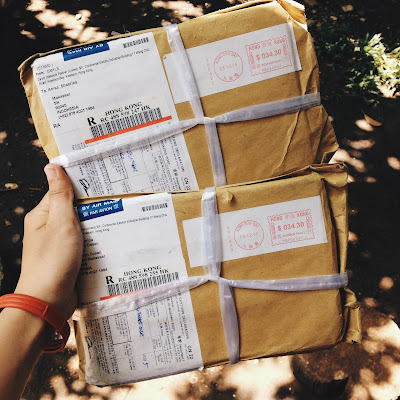
Last week, I received my second package. I've waited for over a month, and that noon Mom suddenly got into my room and gave me the package because she's the one who always get excited to receive such thing. 


So, a month ago, I joined a design contest in Instagram. The design contest was first announced by TheDailyType account. For Typography enthusiast, must be familiar with this account for sure.

A month ago coincided with the celebration of Christmas. I'm not celebrating Christmas tho, but I thought the prize that was offered is quite interesting (moreover, the contest was applied worldwide so the competitors come from all over the world and that's what makes it exclusive. LOL). We were told to make phonecase design with Christmas wishes/quotes, and three selected winner will get the phonecase with their own design on it. And also, the winners will be mentioned and featured on TheDailyType feed. I made my own quote that's pretty much related to the contest theme. So yeah.

Here are the three selected winners, and I'm so happy I was one. 

Instagram account:
colorsofchrist - secondhandinspiration - nichasy

As seen on the first picture above, there were two packages I took a picture of. Yep, I didn't think that I would have received two. I was thinking of doing a little giveaway, but right on the next day when I met my friends, a friend of mine asked me for the phonecase, so I think I'm just gonna give one to him. 


If you are interested, you can take a peek at GMYLE website and scroll over their collections to find one that suits best to your gadget. As what GMYLE stands for; Gadgets Make Your Life Easier.


Settle Down

When it comes to marriage, some people are persistent to make such thing comes true while some believe that it is not really necessary. Some people will get cranky when they're being asked about it. Especially when they already passed through the 'scheduled' time in where the society has insisted that they should have been married—along with the vibes that people bring which can make them feel less confident. 

To certain ages, marriage can no longer be used as a joke. The question we ask may sound simple, for example, "when will you get married?". One day, I asked that question to one of my senior. She answered the question with a wry smile on her face "I did, once". And then I suddenly reminded of the truth that she already got divorced and now she is raising a kid on her own. I felt really sorry by the moment she answered the question and gave hear a bear hug. Sigh..

A friend of mine has acknowledged that he thought the marriage is something he doesn't really need in his life. Of course, some internal factors become the reason why did he think so. There was just two of us talking, so the statement sound a lil' bit strong in my ear. He said that he has plenty of dreams in the future—and by the presence of someone in his life, he thought that it will just obstruct him in reaching out that dreams of his. What an idealist. 

I didn't blame him for the way his mind works, eventhough the statement he just barely spoken at that time somehow sounds mistaken. I also think that some people who are close to him will surely be disappointed. Moreover, when it comes to his family circle. By the way, he's going to be 31 by this year. So you can imagine the pressure he has been facing over years, especially everytime he's being told to find a life companion. I think that would be very way more disappointing to the woman who loves him—to get to know about his point of view about the need of marriage—which he thinks is not needed. Unless if that woman also has the same point of view that we still can survive without the presence of partner. But how would it be when two person with such point of view meet and fall for each other?  Probably, they will just spend days by saying "I love you" to each other and forget it a day after until one reveal it all over again. 

The divorce cases make some people don't believe in the sacredness of marriage. I often hear people said "even the married ones still has the possibility to get divorced" which pretty much sounds like "let's not be too surprised if any of us give up first because that's totally normal and that's how this life supposed to work"

The failures often make people do generalize. Some people don't believe in something before they experience, while some others experience without ever believe in it before. We tend to learn from the existing case, and that doesn't mean bad because being sceptical is also needed—eventhough we know that what each people are experiencing with different characters and level of intelligence will not be exactly the same. And there also goes a thing called fate, which is out of our business. You just can't generalize because obviously, it's not that every guys are jerk. It's not that every girls are slut. It's not that everyone who log on to Omegle is feeling horny.

A study concluded that what matters in one particular family is the presence of two biological parents. A children will do better when raised by a married mother and father. Thereby, the marriage is primarily needed. The conclution will turn otherwise if a children is raised by the un-married. Although there's no guarantee for the marriage to remain flawless. And yet, this life has nothing to compare with those well-written fairytale.

I believe in marriage with all the advantages and the shortcomings that follow. I believe in the hidden truth that two people who happen to love each other keep to themselves. I believe more in things people choose to be left un-shown. 

Nobody wants to be homeless. So once you've commited marriage, that's the time you place a home within that person whom you choose. That's all you carry whenever you're alone together.

Whenever you see old couple that has been together for like over 30 years, don't think that they are the happiest or the most loyal couple alive. Think of the effort they've been doing in order to taking care of their "home" instead of how happy they might seem, because that's the time you start to compare. 


Grow

When I was a kid, I used to be really afraid of overcast. I remember that each night, I always walk outside the house to check whether there are stars up there. When I couldn't find the stars lies over the sky, I feel worried. That means, the cloud is covering the sky. Which means again, the weather is not really good and it will be rainy by soon.

No, it's not that I dislike rain. But, my biggest fear at the time was bad weather that first come up with the sign of cloudy sky. I was really afraid of disaster. I was afraid that such thing would make me lose the ones I love. I can't even bear the thought about it.

It's kind of tickling everytime I remember those habit; walk outside the house and look up to the night sky. It's funny how the thick globs of dark cloud literally got myself worried. Despite the fact that as we all know, overcast doesn't always mean that it will be rainy tho.

All those childhood fears still well remained until now. During 21 years, there are a lot of overcast I've gotten through. Next, in the process of growing, the fears in my life becomes way more complex and varied; compared to the droplets which I used think—always—is a sign of disaster. I'm afraid of getting failed on the university entrance test. I'm afraid when I come home late after hours hangin' around with friends. I'm afraid of being not good enough in the society. I'm afraid of not having the opportunity to make my parents happy. There are a lot of things that I fear which not only makes my heart tremble, but it also makes me mentally overwhelmed. Well, the fears are now twofold.

The last couple years were the most challenging years. On the other side, there were also a lot of things I could pick as lessons. Sometimes I wonder how does it feels like to live with physical disability—for instance, blind. On the one side, they are classified as lucky because the shortcoming make them doesn't have to see the heartbreaking views, nor the heartless. Sometimes I think that life isn't fair, but then I think back again, "Do you think the shortcoming which they happen to live with is fair to them? NO."

I learn that this life is actually fair, because it's unfair for everyone. Everyone has their own role. Thereby, there's nothing such as useless nor unworthy. People are responsible for what they do.

I learn that in such a bad situation, we shouldn't let things get any worse. There are few things that better left untold—like the good deeds—or prayers—no matter how significant the influence that it brings.

I learn that everyone is struggling hard. They all got the ones they care for. If only I could, I wish everyone—no matter how bad they were once—whoever they are—could get into heaven. Like, really. We were born equally as human being.

I learn that if we see things as God's way, we tend to be way more grateful.

I could say that I'm shaped by the burdens that I had carried with me for so long. Those lessons got my insight turn another way around. They help me to grow and overcome things. I may not be the strongest or the most patient one. I'm just a life learner who try to let go of things. Because you know, things changes like every second. And if you can't adapt to it, you're defeated.

Workshop: Art for Peace and Reconciliation


On November 27 and 28, 2015 (which is last month), I had the opportunity to attend a workshop carried out by Kelola foundation which was held at Rumata' Art Space. This activity was attended by artist domiliated in city of Makassar which comes from various artistry backgrounds. Not only from visual artist, there were also another type of art that they do, which are performing arts, movies, music, literature, and festival.

This opportunity itself was a coincidence for me. Previously, I was invited by e-mail by team of Kelola foundation based on the recommendation from an awesome guy I've just barely known like a month ago. First, I was not sure to come by because I'm kinda having some lack of self-confidence issue. But then after some consideration, like this activity is not open for public (I could say myself a chosen one) and then a friend of mine convinced me that it was a pretty good start, I decided to just go ahead eventhough I really have no idea who is coming. I even got there all by myself.

Along with the invitation sent by e-mail, there were a number of files contains the form of identity that will be filled by participant with two core questions:

What social problems you want to put as target?
What artistic intervention (works of art) that you want to do in dealing with these problems?

The questions are quiet simple. But on the other side, it somehow loses my appetite. I'm gonna tell you next time about my own ideas because I had no chance to explain to them. Or maybe I had, but I chickened out.

So, talking about Kelola foundation (www.kelola.or.id), this foundation is a nonprofit organization working in the field of art and culture. Both fields becomes their major focus with the hope that they can develop the arts in Indonesia so it can continue the living and be highly competitive in around the globe. Kelola has opened learning opportunities for over 3.500 artists from Indonesia through their program which is a cooperation with some international institutions.

Kelola foundation as a group is aware of the huge potential in the arts in Eastern Indonesia. But on the other hand, the region also experienced some complex social problems. Therefore, the output that they expect can be contained from this activity is a diclosure of explanation for some of the following questions:

Why the Eastern Indonesia region is very prone to conflict and violence?
What is the source or the core of all those problems?
Where is the position of the culture in this matter?
Does art have the potential to take role as a mediator, or even the originator of reconciliation in society?


With theme "Art for Peace and Reconciliation", the workshop that was held for two days was opened by Niwan A. Arsuka by giving a little introduction about the social issues that are currently happening around us with the ideas of reconciliation that can possibly be done. The first day was filled by sharing about the power of art in the public space. And then the second day continued with the technique of proposal writing related to the art project that has been discussed on the previous day and more detailed explanation about the series of activities of the project.


The social problems that are described based on the experience of each artists or any issues that interest them. Two of the problems are begal and motorcycle gang that once become a hot issue in past several months. These social problems was pointed out by one of the participant to be discussed together so then anyone could come up with the idea of artistic intervention that can be done afterwards. Sure, there are so many people who feel anxious by the presence of those motorcycle gang. We also discussed what is the thing that can be a trigger of their nonsense-appearance. Some of the answers are: they are in the searching for existence or self identity, the exaggerated energy surplus of the members of motorcycle gang that mostly are teenagers, lack of supervision of their closest people, and how those issue is closely related to media nowadays.  

Not only motorcycle gang issue, the other participants also shared their story which they experienced and felt by themselves. Like the story of one of other participants; he told about how the art—indirectly—made the brash behaviour of students in Labuan Bajo become devastated. He told that the students are given a special room in their school to express their feelings in their souls that has been overwhelmed for so long. Another participant also told their awareness about the issue of refugees, which comes with various factor such as war, natural disaster, and discrimination. 

And then, how artistic intervention (works of art) can be done in dealing with these problems? These question then becomes a trigger in where the social conflicts becomes its target. 

A simple example, for instance; Music. Through the music, several artists are voicing the call for peace. Music is used as a tool to touch the sense of humanity, universally. Probably, we are all familiar with songs like Imagine by John Lennon, Heal The World by Michael Jackson, or We Will Not Go Down (Song For Gaza) by Michael Heart. 

The first thing that pops into mind is the attempts to divert activities that can be trigger of conflict through art activities. This discussion subsequently gave birth to new ideas that are developing the basic ideas of one participant. A few of them are the idea of an exhibition of making sculpture in public space, involving motorcycle gang members, with the hope to turn their negative activities into something productive. The next idea is performing arts, with a concept of helping refugees to express and describe their problems. In addition, this performing arts is expected to educate public so they can understand the problems of refugees. The next ideas are to make a colossal theater, musical stage, and so on—which we expect can resolve the social problems around us. 

The idea of each artists that have been processed together will then be chosen to be accomplished based on proposals which will be submitted on the next time.

Of course, we hope that it doesn't stop at just the tip of implementation. However, there are processes that bring learning to the individual and the society. As well as the impact and impression that left after the art projects carried out. 


*this article is written to be published on Ruang Antara, with a little addition.